As the Coronavirus continues to spread throughout China, the United States, and different areas across the continents, more and more information continues to come about it. When I created my last post about the virus, it was still unaware how exactly the virus spread or how easily it would spread from person to person. Since then, the World Health Organization (WHO) has worked with various experts to expand more scientific information about the virus. They have worked on tracking the spread, the severity, and have provided advice on how to protect oneself and prevent the spread any further. While a lot of the preventative information may be the same, more importantly, they have been able to find more information on where the disease may have come from and how it may be spread.
The Virus Came From An Animal?
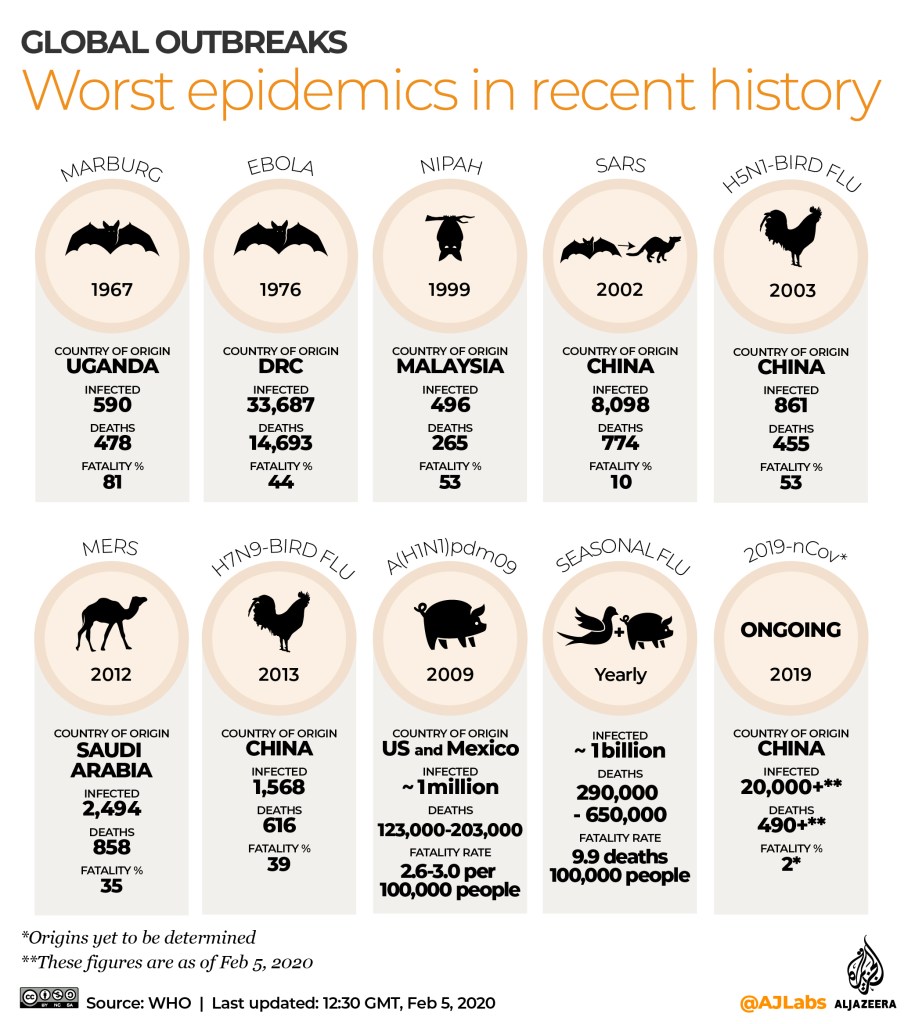
According to WHO and an article published on the Al Jazeera Media Network, an independent news organization, coronaviruses are considered to be zoonotic, meaning “they are transmitted between animals and people.” When the outbreak started in China, the first group of people who identified with the disease had pneumonia, but were also associated with a seafood and live animal market in Wuhan. However, the animal source for this new coronavirus has not yet been identified. Based on the video on the WHO website about the Novel coronavirus, zoonotic diseases are able to spread from animals to humans through due to mutations in the virus or increased contact between humans and animals. Those considered more at risk of contracting the coronavirus are people who are in close contact with animals, such as live animal market workers, and those who care for others with infection.
Remain Aware
Because the coronavirus is a respiratory virus, it is transmitted through droplet transmission created when those infected cough or sneeze. It can also be spread through personal contact, touching an object that has been contaminated, and through fecal contamination. There have been people who have reported to have no symptoms, while others have included fever, cough, and shortness of breath. The CDC believes the incubation period, the period between exposure and onset of symptoms, is anywhere from 2 to 14 days. According to the South China Morning Post, the virus can be transmitted during the incubation period, so I mentioned in my last post, I believe preventative measures should be taken at all times.
Even though the virus seems to be spreading rapidly, I believe that every bit of new information received is a step in the right direction. Although I am not a real microbiologist, it is easier for me to cope with the spread of the disease and understand things about it as we learn more about viruses in class. Despite all the bad news going around the world, the memes surfacing the internet make things more lighthearted.


 V's Microbionic