Xolair? Oh, Air!

Welcome back friends, today we will be discussing an FDA approved monoclonal antibody drug for asthma called omalizumab, or xolair. Now what is a “monoclonal antibody drug” and what does it do? Monoclonal antibodies are made by clones of immune cells and are only able to bind to one type of antigen. These antibodies are used often to treat diseases as they each target the specific antigens in the body produced due to the disease. As mentioned before, xolair is used to treat patients with asthma ages 12 or older. According to John Hopkins Medicine, this medication is used to decrease the number of asthma attacks that a patient experiences and has also shown to either reduce or eliminate other medications used for the same condition.

Side Effects

Xolair targets the antibodies in the blood stream, preventing them from binding to the surfaces of the mast cells and basophils. Because of this, the cells are unable to release their chemicals, therefore preventing the allergic reaction and/or inflammation. Like all medications, there are side effects associated with xolair, the most common side effects being: headaches, viral infections, upper respiratory tract infections, and injection-site reactions (such as pain, redness, swelling, etc.). The most serious side effects of xolair life-threatening allergic reactions, difficulty breathing (what a coincidence), fainting, low blood pressure, and swelling of the tongue or throat. According to Xolair, the manufacturer website, people considered high risk for a parasitic infection are more susceptible at getting a parasitic infection after receiving this medication.

Impact On Immune System

As the drug is directly working with part of the immune system to prevent asthma attacks, it suppresses the acquired immune response. The impacts of the drug on the immune system can be seen as both positive and negative based off of the list of side effects. While the drug is working to prevent the number of asthma attacks that a patient experiences, it is also negatively affecting the immune system and showing side effects in the patient. But just like all drugs working to prevent disease, one must weigh out the positives with the negatives to decide whether or not to go on with a treatment. Asthma is a disease that runs in my family, so I would definitely consider taking xolair if it were up to me. If one was to experience a side effect of the medication, they could easily consult a doctor on whether or not to continue on with the treatment.
Will There Be An End To Ebola?

When I hear the word ‘Ebola,’ I immediately think back to the year 2014 when the disease spread like wildfire throughout West Africa. I remember news spreading about the outbreak and everyone being scared of the disease being brought to the United States, but since then, I hadn’t really heard anything about it. Recently, however, there has been a huge Ebola outbreak in the Democratic Republic of Congo. While the tenth case of Ebola in 40 years was declared in August of 2018, according to Medecins Sans Frontieres, an independent medical humanitarian organization, the numbers continued to rise. This is considered the country’s largest-ever Ebola outbreak, and the second-largest Ebola epidemic recorded.

Light At The End Of The Tunnel?

During the first eight months of the outbreak more than 1,000 cases were recorded in the affected region, but the number doubled within three more months. Between early June and beginning of August, the number of cases reported per week averaged between 75-100 cases a week, but the rate slowly declined. At the beginning of this year [2020], the number of cases reported weekly declined dramatically, but according to the Washington Post, just two days before the World Health Organization was going to announce the end of the Ebola outbreak, a new case emerged. Just as people were beginning to feel relieved that this would all be over, they are now having to continue to worry about contracting the disease for the next few months. The only somewhat good thing about this happening at the time it did is that the country was still considered to be in “response mode.”

While the World Health Organization has been working closely with Congo to help eradicate the disease, the reemergence of a case is devastating especially to those who are under threat from the coronavirus outbreak. As Kate Monger, the person who oversees the regional response for the International Rescue Committee, said “This is now a triple emergency: vulnerable populations facing ongoing humanitarian crises, the spread of covid-19 and now again potentially re-emerging Ebola crisis.” It is known that the virus can remain present for over a year in semen of patients who survive the disease, so the new case could have risen by being passed on from a survivor. This raises concerns as the disease could have been transmitted to hundreds of other people without them knowing. The World Health Organization has said they will continue testing about 200 people a day, dead and alive, to find carriers of the virus.

Even though this disease doesn’t pose a threat to me personally, it is still devastating to hear news like this. I just hope and pray that this will all be over soon for those affected by this every day.

Outside Covid-19

While it seems as if everyone in the world is focused on Covid-19 and everything that has to do with the virus, there are still hundreds of other diseases impacting people every day, one of them being diabetes mellitus. Everyone has probably heard about diabetes, but do you really know exactly what happens when someone has diabetes? What are some of the symptoms? How relevant is it today? Today I will be writing a quick overview about diabetes and how it is affecting the world every day.

What Is Diabetes?

According to Medical News Today, “diabetes is a condition that impairs the body’s ability to process blood glucose, otherwise known as blood sugar.” In the US, it is estimated that about 30.2 million people over the age of 18 have either diagnosed or undiagnosed diabetes. There are two main types of diabetes mellitus, diabetes Type 1 and diabetes Type 2. Type 1 is usually presents in children or in young adults due to the body failing to produce insulin, and type 2 is more associated with being overweight when the body doesn’t respond effectively to the insulin produced. There is another, less common, type of diabetes known as gestational diabetes. According to Patient, an online medical website, this occurs when pregnant women who have never had diabetes before, have high blood glucose levels during pregnancy. Some of the symptoms associated with diabetes are being excessively thirsty, passing a lot of urine, and tiredness and weight loss. Symptoms can develop quickly for people with type 1, while symptoms for people with type 2 develop rather slowly.

Relevancy Today

Diabetes is a very serious, chronic condition that can lead to many health problems for individuals diagnosed with it. According to the article on Medical News Today, diabetes is the seventh leading cause of death in the US. It can be manageable, however, those who haven’t been properly diagnosed do not know how to care for themselves. There is no known prevention for type 1 diabetes, however, following a healthy lifestyle can help prevent developing type 2. It s important for people who are at a higher risk of developing the disease to change their unhealthy habits into healthier ones as their whole new lifestyle could change.

While everyone in the world has been focused on Covid-19 and how it has been spreading across the globe, I think they should also be paying attention to the other diseases impacting people every day. Outside of the Covid-19 realm, people are dying of other health complications and it seems as if there hasn’t been much care towards that since the virus started. It is particularly more important for diabetic people to be careful nowadays because according to Healthline, an online magazine, people with diabetes may have a higher risk of developing Covid-19. People need to begin taking better care of themselves in order to help combat all infections.

Will Things Be Going Back To ‘Normal’ Soon?

Hello friends and welcome back to my blog! As we all know by now, basically the whole country is shut down and under quarantine due to the coronavirus. Personally, I don’t have faith that any of this will be over soon, but there are still some sparks of hope arising every now and then. For example, there are antibody tests currently being studied to determine if someone who has already been infected with the virus can be considered immune and can continue on with their daily lives. This antibody test is a blood test that can determine whether someone has ever been infected with the coronavirus at some point. However, according to the New York Times, “they are not perfect, and there have been problems with their accuracy,” so studies are still being conducted.

How Is The Test Read?

The test being conducted to determine this is called a serology test, looking for signs of an immune response. When the body encounters a virus, the first type of antibody to appear is the immunoglobulin M, or IgM, and its levels spike within a few days of infection. However, IgMs cannot find an infection alone so a second antibody called immunoglobulin G, or IgG, helps to recognize the specific virus. If there are only IgM antibodies present, the virus is current or has just passed in the body, if there both IgM and IgG antibodies present, there is still an infection going on but it could be towards the end of its run. As IgG levels rise in the blood, the IgM levels will drop indicating that the infection is not new in the body. If IgG antibodies are primarily present, this could indicate that the person has either had the infection before, or they have a latent infection. Therefore, if a person is IgG positive, they could still possibly infect other people but they wouldn’t be the most contagious person as they could be getting over the infection.

Test Findings

According to ABC News, there was a study conducted out of Shanghai that looked at blood samples of 175 patients who had recovered from mild Covid-19. This study didn’t go through a scientific peer review, but their results were interesting. They found that about a third of people developed relatively low antibodies, while in others, no antibodies could be detected. The study also found that “elderly patients were most likely to induce higher concentrations of the antibodies than younger patients.” This could mean that the lack of antibodies produced in younger patients could possibly mean a lack of immunity to the virus. Despite this, these antibody tests will be effective in determining how widely the virus has spread in the population and will help scientists better estimate the death rate of Covid-19.

These new tests being administered alleviate some of the stress and anxiety I have about proceedings of this virus, but they still haven’t cleared the air for me. Hopefully scientists will be able to crack down to the nitty-gritty of the serotypes and will know how to proceed with Covid-19 infections. All of this craziness going on in the world has done nothing but make everything seem so negative.

Is There A Cure For Cancer?

Hello friends and welcome back, this week we will be going back to normal and talking about more scientific-y things. As you might have guessed from reading the title to this post, we will be discussing an emerging cure for some cancers known as CAR T-cell therapy.

What is CAR T-cell Therapy & How Does It Work?

As you all may know, a cure for cancer hasn’t exactly been announced, but there is an emerging immunotherapy treatment that seems promising. CAR T-cell therapy involves taking a patient’s immune cells, modifying them to target cancer, and then returning them to the patient’s body. According to the Cleveland Clinic, once blood is collected from the patient’s body, the T cells are separated and removed from the blood while the remaining blood is returned to the body. T cells are used because they are the body’s primary killing cells, protecting the body from abnormal cells, including cancers. However, at times, T cells don’t recognize the cancer cells or can’t fully destroy all of them present in the body. After the cells are separated from the blood, they are genetically modified in a lab to have special receptors on their surface called “chimeric antigen receptors,” or CAR. These receptors allow the T cells to better recognize cancer cells to kill them. The patient then receives some chemotherapy to improve the chance that the CAR T cells will be accepted and not attacked by the immune system when returned to the body. Lastly, the cells are delivered back to the patient through a blood transfusion and they remain in the patient’s body to help fight cancer if it returns and helps keep the patient in remission.

Car t-cell therapy process
How CAR T-cell therapy works. Source: Cleveland Clinic

Are There Any Risks?

There is a clinical trial running for the treatment and according to New Atlas, an online magazine for new technology and science news, “as many as 93 percent of participants in the latest trial responded positively to the therapy.” While there has been positive outcomes however, there is still a downside to the treatment. For one, it is a very expensive treatment so not many can afford it, and two, there have been some serious side effects associated with it. Many patients experienced cytopenias, a reduction in levels of certain blood cells, while other patients experienced infections. Some patients even experienced neurological events including encephalopathy, confusion, agitation, aphasia, and other symptoms. These side effects can make it difficult in patients with other medical problems, so research is still being done on them. Fortunately, some of the side effects can be managed with other medications, but they may also not always be available.

Success?

Results of CAR T cell therapy for patients with lymphoma and other blood cancers are high and promising. Patients whose cancer returned or those whose treatments didn’t work, achieved full success with CAR T therapy. In the clinical trial stated in New Atlas, 67 percent of patients entered remission within a few weeks of the treatment and follow up exams a year later showed 57 percent were still in remission. However, while there is a high success rate giving hope to patients, longer term trials with a larger pool of patients is needed to confirm numbers. If larger trials are used, it will help identify the side effects and the best ways in which to manage them.

This new immunotherapy has raised a lot of hope for cancer patients across the globe, but more research is still needed to get better results. It never fails to amaze me how much our bodies do for us and how much doctors and scientists are able to use things in our body to help us fight off infections. I believe that with more research being done with this therapy, it will soon be known to have 100 percent success rate and it will be used to treat more types of cancer.

TB : Tuberculosis

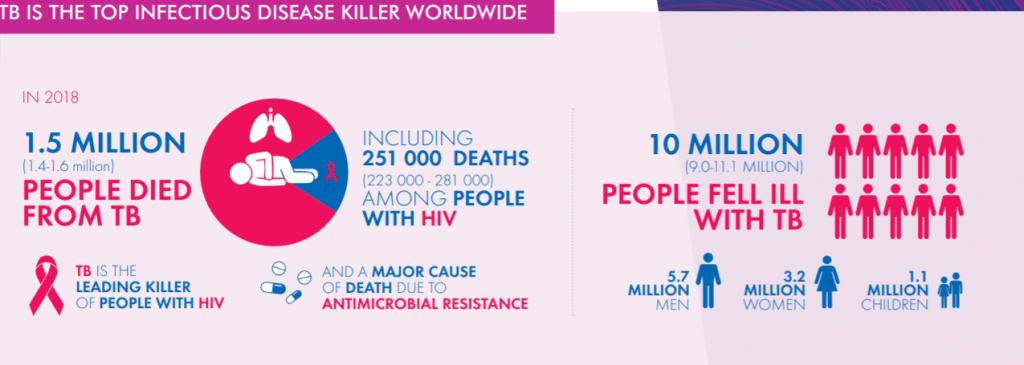
March 24, 2020 was World Tuberculosis Day, but it was probably overlooked due to the coronavirus impact on the world today. While Covid-19 has been circulating in the news the past few months, it is important for people to keep in mind that tuberculosis is still one of the leading causes of death around the globe. According to the World Health Organization, “a total of 1.5 million people died from TB . . . Worldwide, TB is one of the top 10 causes of death and the leading cause from a single infectious agent.” While TB is very widely known and there is lots of research out about it, scientists and doctors still continue to study it to find more information about it. There is always room for more knowledge in life . . . especially when it comes to diseases.

A recent study at Stanford Medical School shared on Medical Xpress, an online magazine, indicated that young children exposed to TB have a very high risk at developing the disease. The findings for the study originated from the largest study to assess TB risk among children exposed to the disease since this disease kills about 205,000 children per year. They found specifically that children younger than the age of five were more prone to developing the TB when exposed. According to the article, elements contributing to the disease in the 1940s are very different than what contributes to it today. HIV, which is one of the biggest factors today, was not known back in the day. Malnutrition was also much more common in the 1940s than today. Fortunately, with advances in technology, there are more tools to diagnose the disease and there are better ways of collecting data on it.

Source: CommunityMedicine

With this advancement in the knowledge on TB, researchers were able to take preventative measures with the children that tested positive for the disease. According to the article, “preventative medications given to healthy children were quite effective if given before children became ill with TB, reducing the development . . . by 91%.” WOW!! The researchers on this study hope their findings will help other experts working with the disease and help them focus better on preventative measures. Personally, I did not know much about TB before taking microbiology, but I am happy to have more information about it as it has opened my eyes to things going on around the world. If people take the precaution and follow guidelines for preventative measures, hopefully the number of deaths worldwide will steadily decline.

What Day Is It?

Hello friends and welcome back! Today we will be taking a more unconventional approach to my blog as times are crazy at the moment. Instead of me informing you all about a certain virus, or vaccines, or anything of that nature, I will be talking to you all about what has been going on in my world lately. As we all know, the coronavirus pandemic has turned the world upside down and everyone is going somewhat ‘crazy’ in these times of need. Because of this virus, face-to-face instruction at school has been canceled and everything is now done remotely. I moved all of my stuff out of my dorm a little over a week ago and I moved back home for the rest of the semester until the fall.

When I first came back home from spring break, I picked up a few shifts at the restaurant I work at to make some money before heading back to school. After hearing that students were not going to return to campus, I got excited knowing that I would be able to make some money before summer started. Unfortunately, because Covid-19 is so easily spread through human contact, all restaurants had to either close or transition into take-out only so I was only able to work three days before that happened. Not only did I have to transition from not working, I also had to transition to having classes online and had to learn how to use all of the technology for that.

Having to transition into all remote courses has been stressful for me as I have had to learn how to manage my time better. All of my classes are taking a different approach to doing things remotely so it has made things harder as I have had to switch back and fourth between all the things that have to be done. Not only are each of my classes taking a different approach, they are all adding extra assignments to make up for missing class time. A lot of the assignments are due on the same day so I have sat at my desk doing work almost 24/7 this past week. As much as when I am at school, I want to come home, but times like these make me wish I could just stay on campus.

Besides having to deal with all of my school work, my mental health has taken a toll since people are supposed to be practicing ‘social distancing’ and ‘self-quarantining.’ I am not usually one to go out all the time when I’m at home, but being forced to stay inside has made things a lot harder for me. I would like to go out and get some sunshine and hang out with friends every once in a while to distract myself from all the school work. I have tried to make it a routine to workout once a day for at least 30 minutes to release some of my stress physically, and I have been able to keep up for a good 10 days. (Hoping to keep it going strong). Although I have a lot of school work to be doing during this quarantine, I sometimes would like to get away from it. However, because I am not allowed outside my house, I am stuck inside, bored. I can’t even keep track of what day it is!

I’m just praying all of this goes away soon and things will go back to normal before summer begins!

If there is one meme or video that describes how I am feeling during this quarantine, it is this one.
Source: Youtube

It’s Corona Time (For Real Now)!

As I said in my blog about HSV-1, it has been a crazy couple of weeks! Why, you ask? Because of the coronavirus (Covid-19)! The virus I talked about before but there still wasn’t much information out about it. Since then, this virus has spread like crazyyy around the world and there is lots of new information now circulating. First and foremost, it is important to know how exactly the virus is spread since there are ways to prevent it. According to the CDC, Covid-19 can be spread from person-to-person through close contact (within 6 feet) or through respiratory droplets when an infected person coughs or sneezes. People are most contagious when they are symptomatic, but some spread may be possible before people show symptoms (although this is not the main way of spread). The virus is also spread from contact with contaminated surfaces or objects by people touching the surface and then touching their own mouth, nose, or eyes. Covid-19 spreads easily through “community spread” in some affected areas. This means “people have been infected with the virus in an area, including some who are not sure how or where they became infected.”

The Pandemic

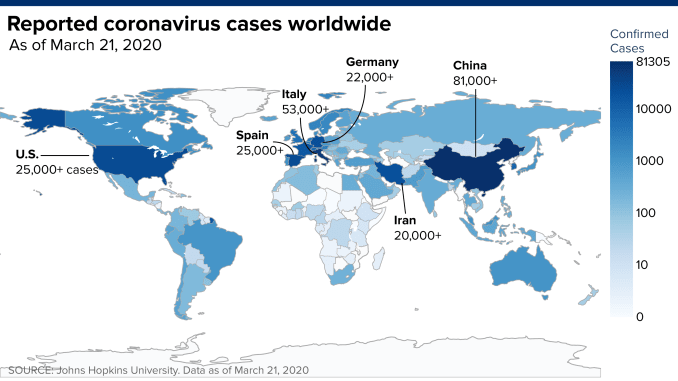
As previously noted in my past blog, the outbreak of the coronavirus originated in Wuhan, China, but has since spread to many areas around the world. According to Vox, an online magazine, “it has spread far wider than Ebola did in 2014, and the World Health Organization has designated it a pandemic,” so crazy and scary! As stated in CNBC, although there are frequent updates by the news medias and independent researchers on the outbreak, the available data “represents only a portion of the total number of cases, many of which have gone unreported.” As of March 21, 2020, China had reported more than 80,000 confirmed cases, while the United States had confirmed more than 25,000 cases. Worldwide, there has been over 14,000 deaths! The only problems with these numbers is that the cumulative cases don’t account for the patients that have recovered or the lags in reporting cases. Just by facing the numbers, however, it doesn’t show the response of how fast the virus is spreading. In the US alone, all 50 states have reported cases of the virus to the CDC, while three of the states are experiencing sustained community spread.

Reported Covid-19 Cases Worldwide Source: CNBC

The Dreaded Quarantine

As the virus is rapidly spreading, it is important for people to take the necessary precautions to prevent further spread. The most important way to prevent this spread is by being in quarantine for at least 2 weeks since the virus is known to have an incubation period of about 14 days. Covid-19 has made large-scale gatherings/meetings unpopular as people are trying to keep their (6-foot) distance until everything is under control. The rapid spread of this virus has led to school shutting down around the world, jobs shutting down, and even state borders being shut down. The only way to have some control over the virus is by trying to contain the spread of it while researchers are learning more about it. According to Vox, a single day’s delay in social distancing can increase the outbreak of Covid-19 significantly, by 40%!! While we are all dreading staying inside for 2 weeks until we know we are not sick, it is important to remind yourself the reasoning behind it. It is also very important to remember that even though you don’t feel sick, doesn’t mean you’re safe to move around. As I have been stuck in my house this past week, it has come to my interest that I remain inside as I don’t want to risk getting sick and giving the virus to the rest of my family. Just remember, the sooner this is contained, the quicker we are out of quarantine!

Hurt-pees? More like Herpes!

Hello, welcome back! It has been a while since I last wrote because it’s been an interesting couple of weeks. Besides that, let’s get straight to it. Today we will be discussing herpes simplex virus type 1 (HSV-1), what it is, transmission, and early prevention.

What Is HSV?

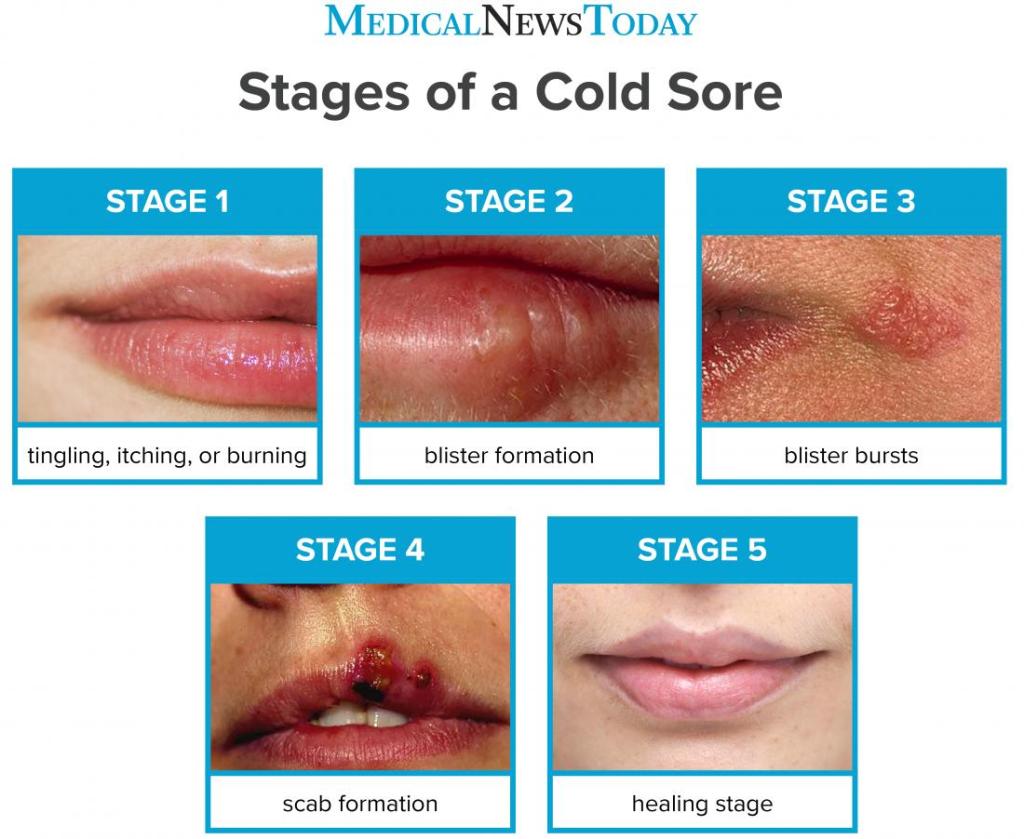
Herpes itself is a viral skin infection caused by the herpes simplex virus (HSV). This virus causes two different types of HSV: type 1 and type 2. Type 1 mainly causes oral herpes while type 2 causes genital herpes, but both can occur in both areas. The cold sores caused by non-genital HSV-1 are known as herpes labialis and appear on people’s lips or in their mouth. According to Medical News Today, some people don’t experience any symptoms, but if symptoms do appear, they are first usually shown as sores. The sores can appear as blisters and can break open and be painful, taking weeks to heal. Some of the first visible signs of herpes are referred to as an “outbreak.” During this “outbreak” people may experience flu-like symptoms including a fever, headaches, body aches, and tiredness. It is very important to know that herpes is transmissible even when no sores or other symptoms are present! Therefore, it is VERY important to know how it is transmitted and how to prevent it!!

Stages of a Cold Sore Source: Medical News Today

Transmission & Prevention

According to another article published on Medical News Today, “transmission of non-genital herpes simplex virus type 1 (HSV-1) occurs during childhood through nonsexual contact, but adults can contract the infection through sexual activity.” HSV-1 can lie dormant in skin cells and neurons under the skin until it is triggered. Because of this, people may experience a burning or tingling sensation on their lips before a cold sore outbreak. When a cold sore bursts and begins oozing, it becomes contagious. People who come in contact with the fluid from an open sore can develop a cold sore themselves within 2 to 20 days after contact. This virus can be spread through kissing, sharing utensils, drinkware, cosmetics, or even towels (if there is fluid from the sore present).

When one begins to feel the symptoms of a cold sore, they may prevent it from happening by treating the cold sores. People with a history of cold sores can usually detect the initial symptoms so they are able to treat the symptoms right away. To reduce the chance of spreading the infection, people should use condoms (duh) during sex. However, it is important to stress that condoms do not offer complete protection against the virus as herpes can live around the genital area that is not covered by the condom. There are more ways to reduce the chance of passing this infection on to a sexual partner, more importantly by telling the partner of the infection before becoming sexually active. The two together can take extra steps including not having sex during an outbreak since the virus can be transferred more easily. The two may wait until all the sores are completely healed before having sex and look for early symptoms of an outbreak. Other recommendations include using a condom even when there are no sores present, washing hands with soap and water after touching a sore, and not kissing people when mouth sores are present.

Abstinence Or Monogamy!

Of course, everyone has their own opinions on when or how to engage in sexual activity, but there is easily one way to be 100% safe from contracting any sexually transmitted infection – abstaining from sex! While some people may abstain from sex completely, it is also better for someone who is sexually active to have only one sexual partner. Personally, I would rather abstain from sex (especially after being in microbiology), but I do not judge anyone who chooses to do otherwise. Just be smart about what you do when it comes to being sexually active!!

It’s A Drug . . . It’s A Bacteria . . .It’s A Superbug!

Hello and welcome back to my blog! For once, we will not be talking about vaccines, at least not directly. Today we will be discussing antibiotic resistance and the increase with superbugs.

What are Superbugs?

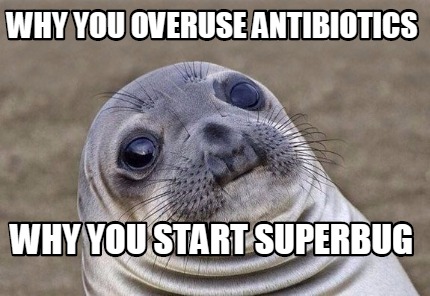
So, what exactly are “superbugs” and what do they have to do with antibiotic resistance? Medical News Today defines a superbug as “a germ that has formed resistance to multiple drugs that once treated the infection caused by the germ.” Any germ has the ability to become a superbug, however, bacterial and fungal strains that commonly infect humans, animals, and crops are most likely to do so. There has recently been a rise in superbugs, partially due to the overuse of antibiotics, leading to antibiotic resistance. Because the natural evolution of bacteria can’t be controlled, there is no way to stop antibiotic resistance entirely, so this is something doctors must keep in mind when prescribing medications to patients.

Source: Meme Creator

Problems Arising

As the bacteria and fungi adapt to the way drugs work in the body, they may start resisting the treatment, leading to multiple doses of different and stronger drugs needing to be used. One of the biggest concerns with this is that people will begin to develop resistance to treatments of infectious that were once treatable. This is no good. According to the Antimicrobial Resistance Report from the CDC, “more than 2.8 million antibiotic-resistant infections occur in the US each year, and more than 35,000 people die as a result.” While prevention and infection control efforts are working to reduce these numbers, the number of people facing antibiotic resistance is still very high. Antibiotic resistance bacteria are more present in areas that require regular sterilization (i.e. hospitals), so regular sterilization is key to combating these infections, but can also make the bacteria stronger. The bacteria are also more common in certain foods, such as those in animal products that farmers have treated with antibiotics.

How to Fight the Problem!

According to NBC News, there are various ways in which we can fight this drug-resistant superbug problem. First and foremost, new drugs that these superbugs aren’t resistant to can be developed. However, this may lead to scientists and superbugs “constantly one-upping each other.” People can help combat this problem by avoiding illnesses before antibiotics or anti-fungals are needed. It is crucial that people stay on top of their vaccinations and get the appropriate vaccines that they need. People may also continue to use good hand hygiene and wash their hands with soap multiple times a day. Most importantly, people need to take their antibiotics as prescribed. If people take antibiotics when they aren’t supposed to or don’t take their antibiotics long enough, it alters their microbe and can eventually lead to resistance.

Common Resistant Organisms

In the Antibiotic Resistance Report posted by the CDC, they classified resistant germs based on risk. Some of the highest risk germs include Clostridioides difficile, Candida auris, and Carbapenem-resistant Enterobacteriaceae. Enterovacteriaceae bacteria cause diseases such as Escherichia coli and Klebsiella pneumoniae. Resistance of these organisms to antibiotics occurs when then the bacteria no longer respond to the antibiotics that kill them. This bacteria family is constantly evolving and fights the way in which the illnesses are treated. When this family of organisms develops resistance to a group of antibiotics called carbapenems, they are difficult to treat because they do not respond to commonly used antibiotics, therefore, being a threat to public health.

While there is a lot of information about antibiotic resistance and how to possibly prevent it, there is still a lot of research to be done. Bacteria and antibiotics are constantly evolving so there is not definite stop to this problem, however, people should do their part to help. If this problems keeps increasing, antibiotics will soon no longer fight diseases that were once treatable. What will we do without these treatments?! So please, if you’re reading this, do your part. I don’t want to get sick one day and there not be a way to help me get better!